Specialist dentistry, shaped around you.
 Consultations at Yoyime Clinic · Deira, Dubai

Patient guide · digital dentistry
A faster crown still needs careful planning.
Some crowns can be designed and manufactured within an appropriately equipped dental practice using a digital scan and chairside equipment. Whether this is right for you depends on the tooth, the material, the bite and the available workflow.

Discuss this with Dr. Aliveni Sowjanya · Specialist Prosthodontist

01
Possible benefit
Fewer separate visits
02
First priority
A suitable restoration
03
Before booking
Confirm availability
01
Understand the process
The digital steps support the clinical decision; they do not replace it.

Assess and prepare
The dentist first decides whether a crown is needed and whether another restoration could preserve more tooth. Any decay, cracks or symptoms must be considered.
Scan and design
A scan records the prepared tooth and surrounding bite information. Software helps design the restoration, which must still be checked and adjusted by the clinician.
Make and fit
Chairside manufacturing can produce suitable restorations within a visit. Material processing, appearance, fit, contacts and bite checks remain necessary before final attachment.
A closer look
From laboratory work to tooth coverage.
The photograph shows ceramic restorations during laboratory firing. The diagram explains coverage; an assessment determines what remaining tooth structure can be preserved.

How it works · simplified
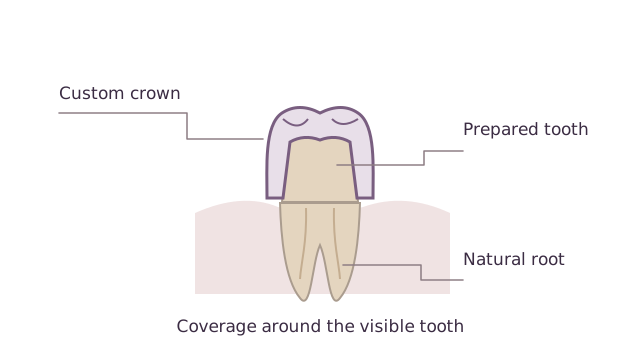
A crown covers the prepared visible part of a tooth. The natural roots remain below the gum.Simplified illustration · not a treatment recommendation.
02
Why more than one visit may be better
Convenience matters, but the quickest route is not automatically the right route.
1
The tooth needs another step
Pain, uncertain prognosis or a need for other treatment may change the sequence. Ask whether it is sensible to proceed to a definitive crown immediately.
2
The case needs laboratory input
Complex shade matching or a larger restorative plan may benefit from laboratory collaboration. Different materials and techniques have different requirements.
3
A temporary stage has a purpose
A provisional restoration may protect a prepared tooth while the final restoration is made. In complex care, trial stages can also help evaluate a proposed plan.
03
Questions before choosing
Confirm the service with the clinic before arranging time off or travel.

Availability
Ask whether the appropriate scanner, manufacturing equipment, material and appointment time are available. This website does not promise same-day crown provision at Yoyime Clinic.
Quality checks
Ask how the fit, bite and appearance will be checked, and what happens if the restoration needs to be remade. Speed should allow time for those decisions.
Costs and follow-up
Compare what is included: assessment, any scans, the crown, temporary care if needed and follow-up. Ask who to contact if sensitivity or biting discomfort persists.
A little more detail
Your questions, answered.
It is a way of making and fitting a crown, not a separate reason to place one. The need for coverage and the condition of the tooth still determine suitability.
No. Both approaches can be appropriate. Material selection, preparation, design, manufacture and fitting matter more than the number of visits alone.
No crown is maintenance-free or guaranteed permanent. The underlying tooth and gums need care, and restorations can need repair or replacement.
Sources & how to use this information
This page provides general education, not a diagnosis or a personalised treatment plan. Ask your treating clinician how it applies to you.

Keep exploring
Your next useful read.

Your next chapter
Start with a conversation.
Bring your questions. Understand your choices. Decide with clarity.
Consultations at Yoyime Clinic · Deira, Dubai

